

See the Person: Why I Turned Supported Housing into a Song
I have written a lot about supported housing, the people who live within it and the people who work on the frontline. This time, I wanted to try something different.
See the Person began with a simple thought. A person can arrive at supported housing carrying a lifetime of experiences, yet the system can reduce them to a room number, a risk assessment or a collection of labels.
Those things may be necessary, but they are not the person.
Listen to See the Person
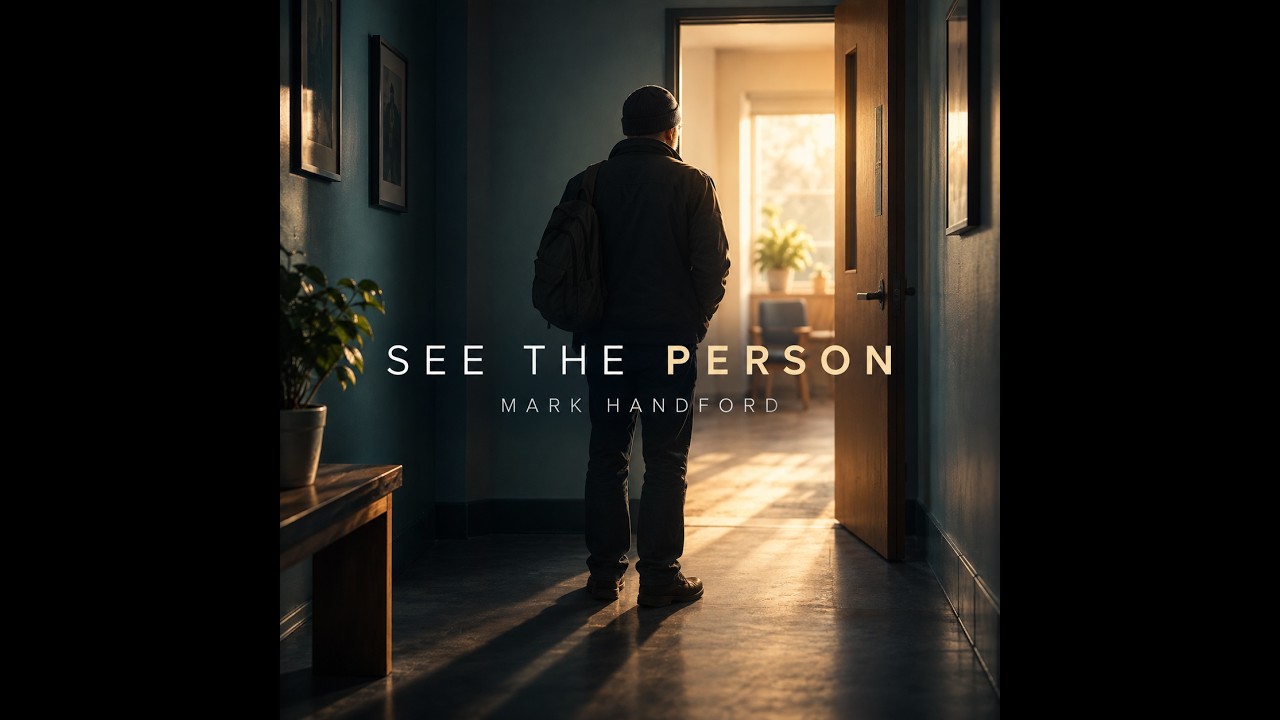
A closed door and the beginning of trust
The song follows a relationship between a resident and a support worker. At first, the worker knocks on the resident’s door and is not allowed in. There is no dramatic breakthrough and no grand promise. They talk about football, music and films. The worker keeps their word and comes back.
Trust grows through those small, ordinary moments.
Eventually, the resident becomes the person knocking on the worker’s door and asking for help. For me, that moment says more about relationship based support than any policy document could.
It connects with something I return to throughout this blog. The knowledge held by people on the frontline is often found in moments that cannot be captured neatly on a spreadsheet.
Holding hope without taking control
The bridge reflects the reality of frontline work. It is relapse and recovery, boundaries, difficult conversations, closed doors and starting again. It is understanding that supporting somebody does not mean doing everything for them. It means walking alongside them while they find their own way forward.
It’s holding a little hope till they can hold their own.
That is not about rescuing anybody. It is about recognising that there may be moments when a person cannot yet see the possibility that others can see in them.
It is also about noticing the small wins in supported housing, including the knock on the door, the conversation that lasts a little longer or the first request for help.
Finding a way forward
The final verse belongs to the resident. They leave with uncertainty still ahead of them, but also with the knowledge that every step was earned. The worker did not walk the road for them. They simply helped them find their way.
I wrote every word of See the Person. I then used Suno to turn those lyrics into the finished musical arrangement and vocal performance. I want to be open about that because the most important part of this project is its message.
Before the labels, the paperwork and the scars, there is always a person.
I hope you will listen and let me know what the song means to you.
If you value independent writing about supported housing and frontline practice, you can support Frontline Housing Insights on Ko-fi.
Discover more from Frontline Housing Insight
Subscribe to get the latest posts sent to your email.
